

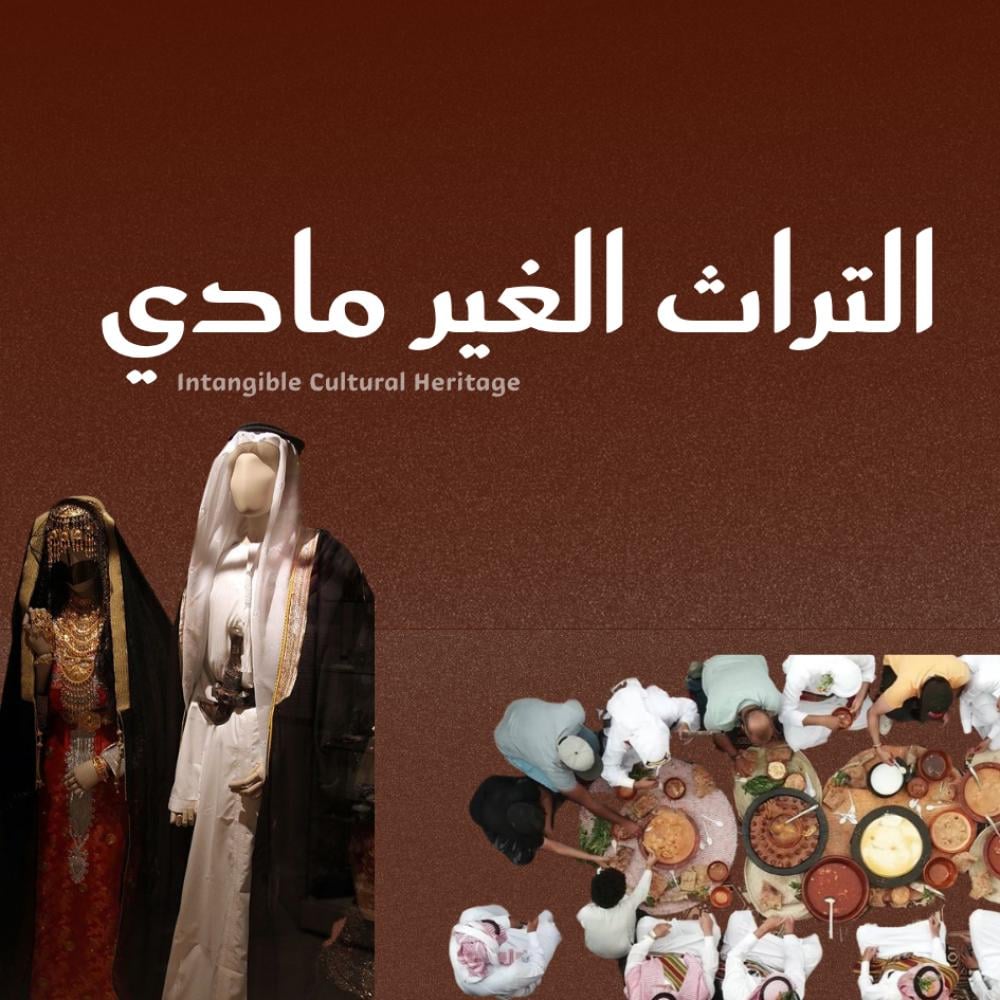
التراث غير المادي هو ذلك الموروث الثقافي والمعنوي الذي تنتجه الشعوب وتتناقله الأجيال عبر الزمن، ويشمل العادات والتقاليد والفنون والأهازيج والحكايات، وكل ما يعكس الهوية الثقافية والروح الأصيلة للمجتمعات. ويُعد هذا التراث ثروة لا تقدر بثمن، لكونه يعبر عن أصالة الشعوب وامتدادها الحضاري.
مجالات التراث غير المادي
1. الأدب الشعبي
• الشعر الشعبي: مثل الشعر النبطي الذي يعبر عن مشاعر الناس وتجاربهم.
• السير الشعبية: كـ سيرة عنترة بن شداد وأبو زيد الهلالي.
• الألغاز: مثل “طاسة طرنطاسة / في البحر غطاسة / من جوة لولو / ومن بره نحاسة”.
• النوادر: مثل نوادر جحا.
• الحكايات الشعبية: مثل النمنم وهول الليل.
• الأساطير: مثل زرقاء اليمامة.
• الأمثال الشعبية: مثل “الصلح بعد العداوة أطيب من الحلاوة
2. العادات والتقاليد والمعارف الشعبية
• عادات الزواج: مثل ليلة الحناء (الغمرة)، الدخلة، والصبحة.
• الاحتفالات: مثل الجكر والناقي والقيس.
• المناسبات الدينية: كالمسحراتي في رمضان واحتفالات تسمية المولود.
• الطب الشعبي: استخدام الأعشاب والوصفات التقليدية للعلاج
3.فنون الأداء الشعبي
• الأغاني والرقصات: مثل الخبيتي، المزمار، العرضة، الطرب الينبعاوي.
• الموال والمجس: فنون غنائية تؤدى في المناسبات.
• الأهازيج: التي تُردد في الأعراس أو مواسم الحج والزرع.
4.الألعاب الشعبية
مثل:
· الكيرم،
· المدوان،
· الزقيطة،
· البرجون.
· البربر
5. الملابس وأدوات الزينة
الرجال: الثوب الأبيض، العقال، والمشلح ,العقال مقصب , الدقله , الطاقيه زري ,الغتره والشماغ , في المناسبات.
• النساء: مثل الزبون، الكرتة، المحرمة، القنعة, الشيله, المسفع.
6. المأكولات الشعبية
• مثل: المعصوب، المطبق، الرز المندي، الرز السليق، الكبسة، الهريسة، السوبيا، التمر الهندي.
أهمية التراث غير المادي
• يعزز الهوية الوطنية.
• يربط الماضي بالحاضر.
• يحافظ على التنوع الثقافي.
• يشكل مصدرًا للإبداع والفنون الحديثة.
خاتمة
التراث غير المادي هو الذاكرة الحية للشعوب، وهو ما يجعل المجتمعات متجذرة في تاريخها، وقادرة على التكيف مع حاضرها. والحفاظ عليه مسؤولية جماعية لضمان استمراريته
Intangible Cultural Heritage
Intangible cultural heritage refers to the cultural and spiritual legacy produced by communities and passed down through generations over time. It encompasses customs, traditions, arts, chants, stories, and everything that reflects the cultural identity and authentic spirit of societies. This heritage is an invaluable treasure, as it expresses the authenticity of peoples and their civilizational continuity
Domains of Intangible Cultural Heritage
1. Folk Literature
- Folk Poetry: Such as Nabati poetry, which expresses people's emotions and experiences
- Folk Epics: Like the epic of Antarah ibn Shaddad and Abu Zayd al-Hilali.
- Riddles: For example, “A bowl, a fancy bowl / Dives in the sea / Pearls inside / Copper outside
- Anecdotes: Such as the anecdotes of Juha
-Folk Tales: Like “Namnam and the Terror of the Night
- Myths: Such as Zarqa al-Yamama
- Proverbs: For example, “Reconciliation after enmity is sweeter than sweetness
2. Customs, Traditions, and Folk Knowledge
- Marriage Customs: Such as the henna night (al-Ghamra), the wedding procession, and the morning-after celebration.
- Celebrations: Like al-Jakar, al-Naqi, and al-Qais
- Religious Occasions: Such as the mesaharati during Ramadan and celebrations for naming newborns
- Folk Medicine: Using herbs and traditional remedies for treatment
3. Folk Performing Arts
- Songs and Dances: Such as al-Khabiti, al-Mizmar, al-Ardah, and Yanbuawi tarab
- Mawal and Majs: Vocal arts performed at events
- Chants: Recited during weddings, pilgrimage seasons, or agricultural seasons
4. Traditional Games
Examples include
- Karrom
- Al-Madwan
- Al-Zaqita
- Al-Burjun
- Al-Barbar
5. **Clothing and Adornments**
- Men: White thobe, headband (agal), mishlah, embroidered agal, daqla, zari cap, ghutra, and shemagh for special occasions
- Women: Such as the zaboun, karta, muharrama, qin’a, shayla, and musaffa
6. Traditional Cuisine
Examples include
- Ma’asoub
- Mutabbaq
- Mandi rice
- Saleeq rice
- Kabsa
- Hareesa
- Sobya
- Tamarind juice
Importance of Intangible Cultural Heritage
- Strengthens national identity
- Connects the past with the present
- Preserves cultural diversity
- Serves as a source of creativity and modern arts
Conclusion
Intangible cultural heritage is the living memory of peoples, anchoring societies in their history while enabling them to adapt to the present. Preserving it is a collective responsibility to ensure its continuity